When is the best time for deck staining in Milton?
Milton keeps much of its horse-country character: large wooded lots, long fence lines, and barns and outbuildings next to the house. Spring pollen is heavy under that much tree cover, so exterior paint, stain, and fence work go on from late spring through fall.
Who permits residential work in Milton?
Residential work is permitted through the City of Milton, and many subdivisions also need HOA approval before an exterior color change. Deck Staining projects rarely need a permit on their own, but we confirm before scheduling so nothing stalls mid-job.
Do you serve my neighborhood in Milton?
Yes. We cover all of Milton and the surrounding Fulton County, including Crabapple, Birmingham, Arnold Mill, Deerfield, in ZIP codes 30004, 30009, 30075. Send us your address and we'll confirm the schedule for your area.
How much does deck staining cost?
The size of the deck, how many railings and stairs it has, the condition of the wood, and whether old stain has to come off first set the price. The estimate is free and itemized, with cleaning, repairs, and stain on separate lines.
Which stain should I use: transparent, semi-transparent, or solid?
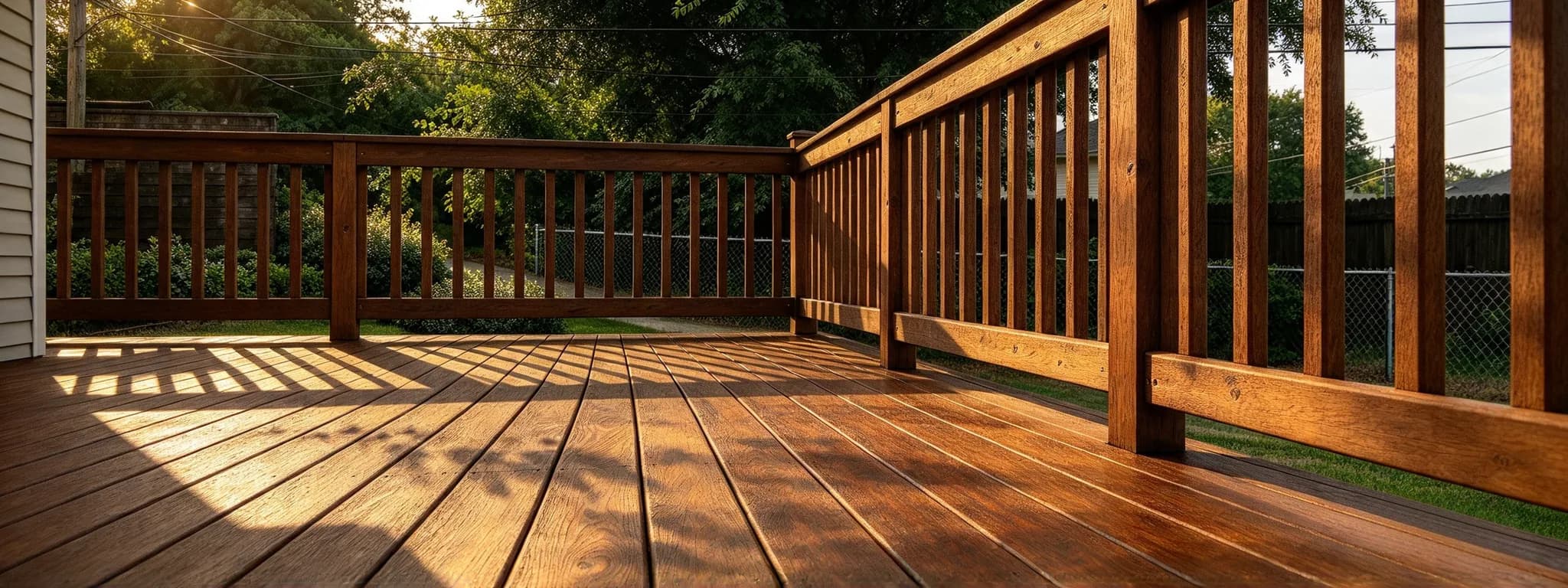
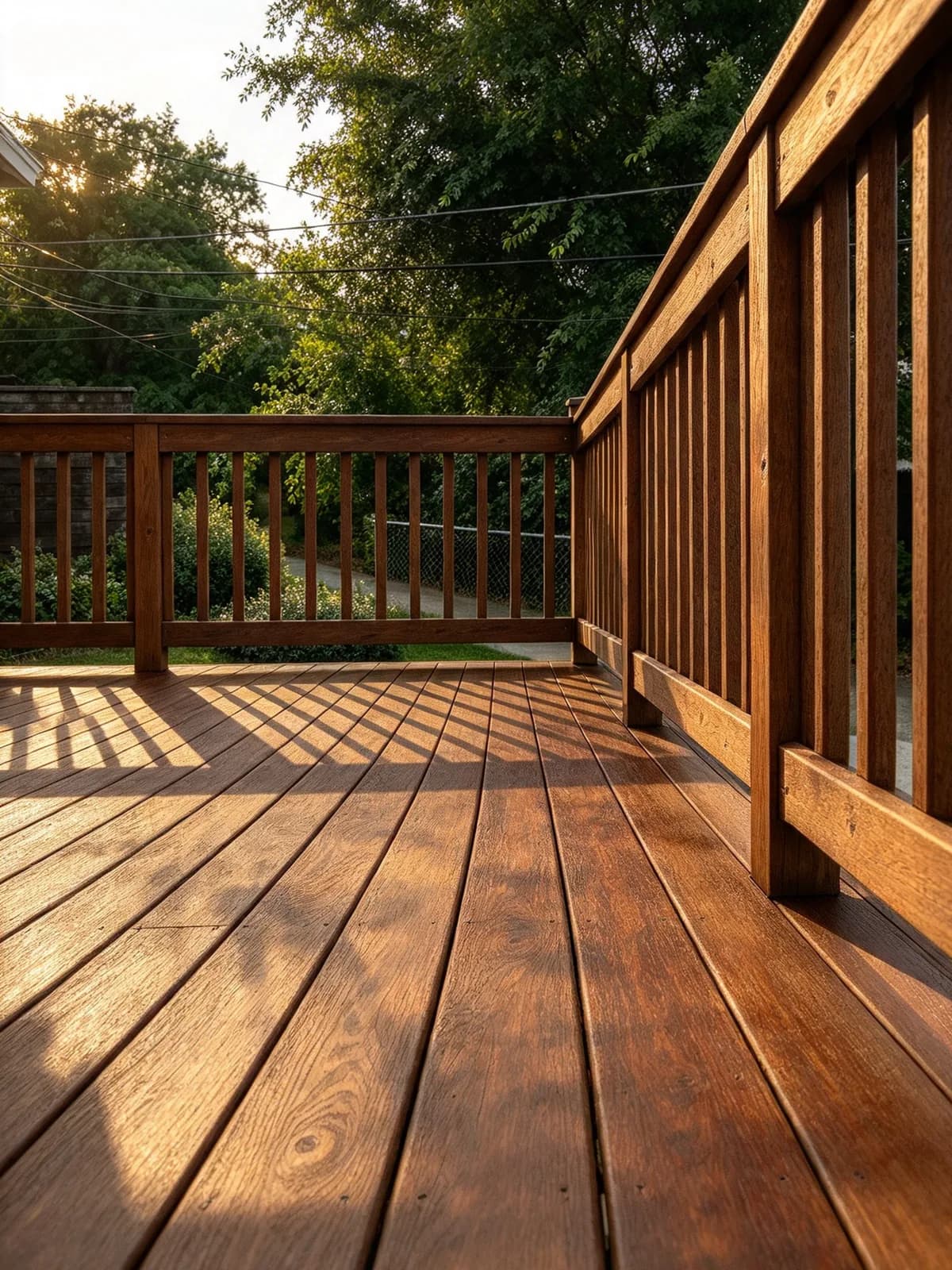
Transparent and semi-transparent stains soak into the wood and let the grain show. Solid stain covers more like paint and hides worn boards, patches, and old color. On an older deck with mismatched boards, solid usually looks best; on newer wood with good grain, semi-transparent shows it off.
How long will the stain last?
It depends on sun, shade, and foot traffic. Floor boards and stair treads wear first, and railings hold up longer. When water stops beading on the boards or the color looks washed out, a maintenance coat brings the deck back for less than starting over.
Do you clean the deck before staining?
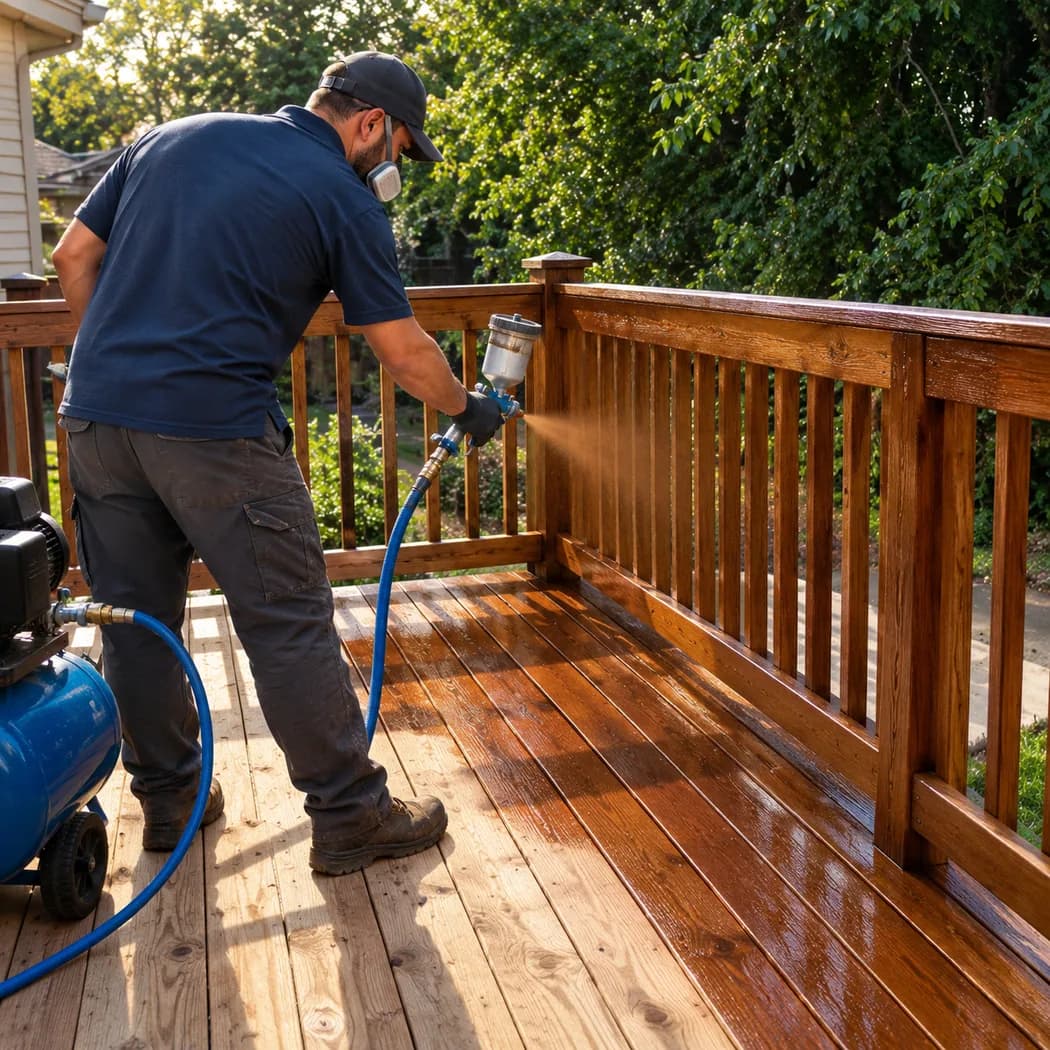
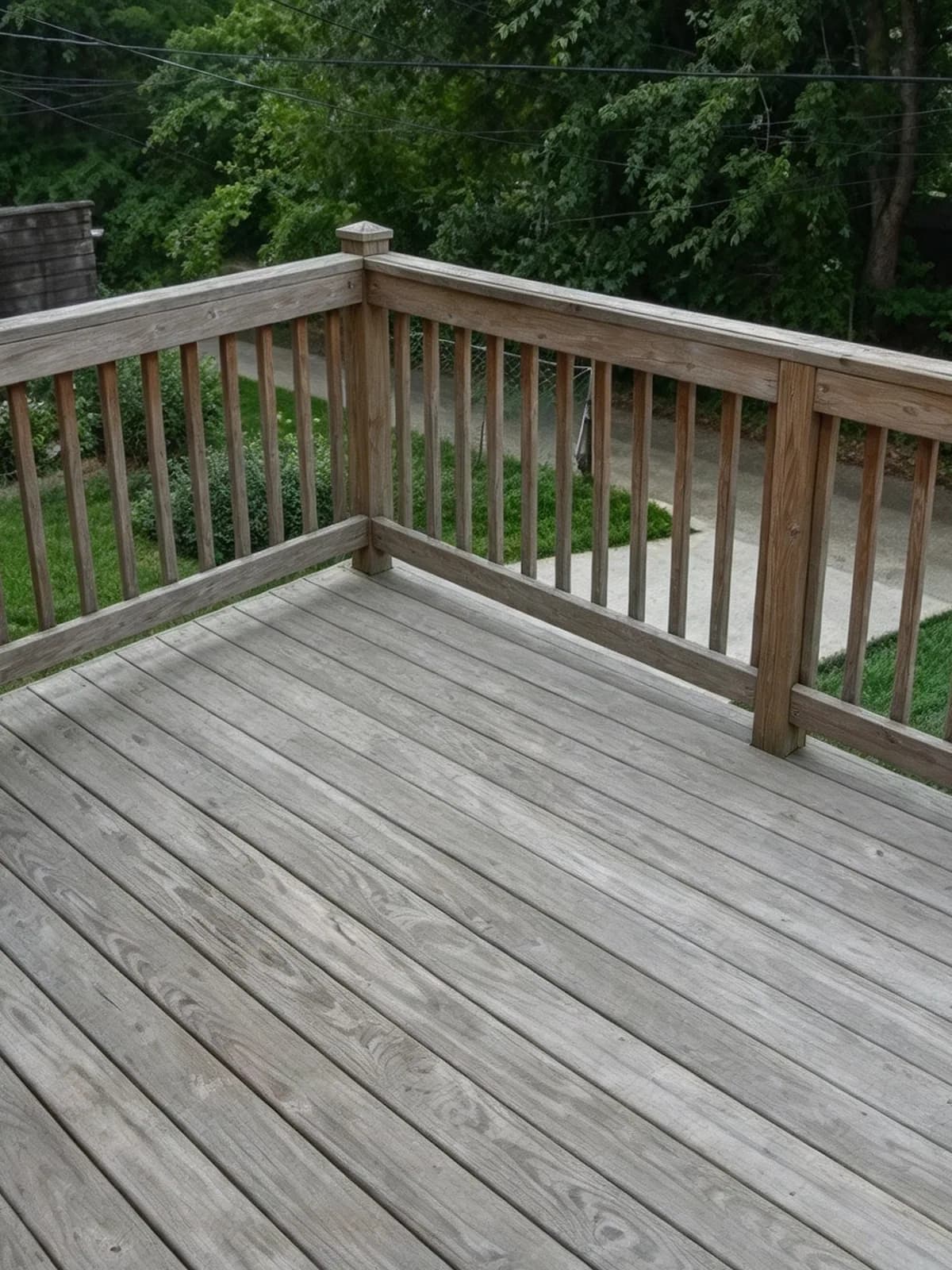
Every time. Stain only bonds to clean, dry wood, so the deck is washed to remove dirt, mildew, and the gray layer of weathered fibers, then left to dry completely before any stain goes on.