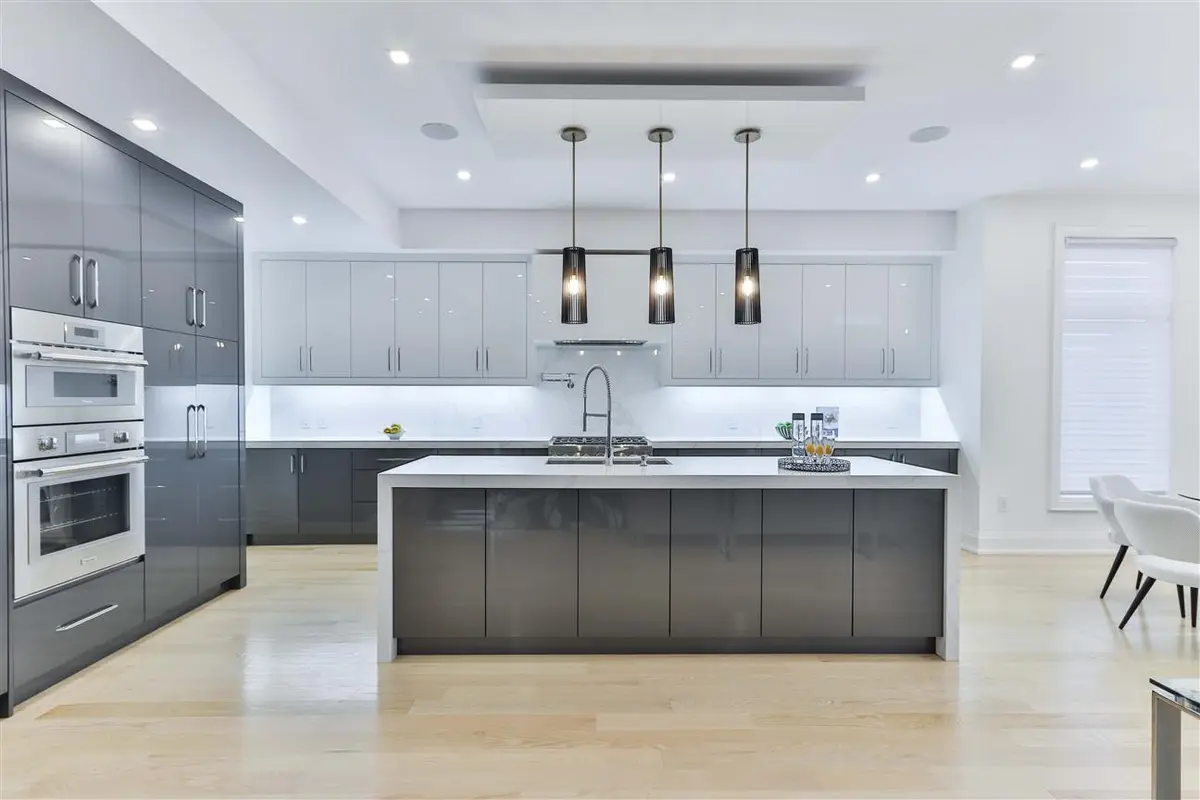
A Dated Oak Kitchen Brought Back Without Moving a Cabinet
Why the Layout Stayed
The client came to us expecting to hear that the kitchen needed to be torn out. It did not. The boxes were solid, the drawers ran true, and the layout already worked for how the family cooks. What had aged was the surface: orange-toned oak doors, a ceiling gone gray with cooking residue, and walls that had not been touched since the house was built.
Keeping the cabinet boxes meant the budget went into the finish rather than demolition, and the family kept their kitchen through the whole job instead of losing it for a month.
Stripping Back Years of Cooking Residue
Paint will not stick to grease, so before a single coat went on, every door, frame and drawer front was washed down with a degreaser and then rinsed. The cabinets on either side of the range, where the buildup was heaviest, got that treatment twice.
Degreasing is the step homeowners skip most often when they refinish cabinets themselves, and it is the reason those jobs peel within a year. Paint bonds to whatever is under it. If that is a film of airborne oil, the finish is bonded to the oil instead of the wood.
Filling the Grain: Why Oak Needs It
Oak has an open grain, which is exactly why it looks like oak. Paint straight over it and the grain telegraphs through the finish, so instead of a clean door you get a painted-looking door with texture lines running down it.
We filled the fronts, sanded them flat, and filled again where the first pass sank. It adds a day to the schedule, and it is what separates a refinish that looks like new cabinetry from one that looks like a paint job.
Spraying Instead of Brushing
Doors and drawer fronts came off and went to the shop to be sprayed. A brushed finish leaves stroke marks that catch the light along a long run of cabinets, and a kitchen is mostly long runs of cabinets.
Two coats went on, and each was left to cure fully before the next instead of being rushed back to back. The frames still on the wall were sprayed in place with the openings masked, so the doors and the boxes came out as one continuous color instead of two near-matches.
The Ceiling, Walls and Trim
With the cabinets curing, the rest of the room was repainted around them. The ceiling took two coats to cover the residue stains, the walls went matte to keep the light soft, and the trim and door casings were cut in last.
Painting the room after the cabinets, not before, meant any overspray or handling marks were covered by the wall work rather than landing on a finished cabinet face.
How the Kitchen Was Handed Back
Doors were rehung on their original hinges, and the existing handles were cleaned and refitted. They suited the new color, so replacing them would have added cost for no gain. The family cooked in the kitchen that evening.
The job took five days from the first degreasing to the final refit, and the sink and range were usable on every one of them except the two days the doors were away being sprayed.